Appliance leaks run where nobody looks: under the dishwasher, behind the fridge and into the floor under a washing machine. By the time the floor feels soft or a ceiling stains below, the water has spread through several layers.
Hoses and appliances
Appliance and Supply Hose Leaks in Stillwater, MN
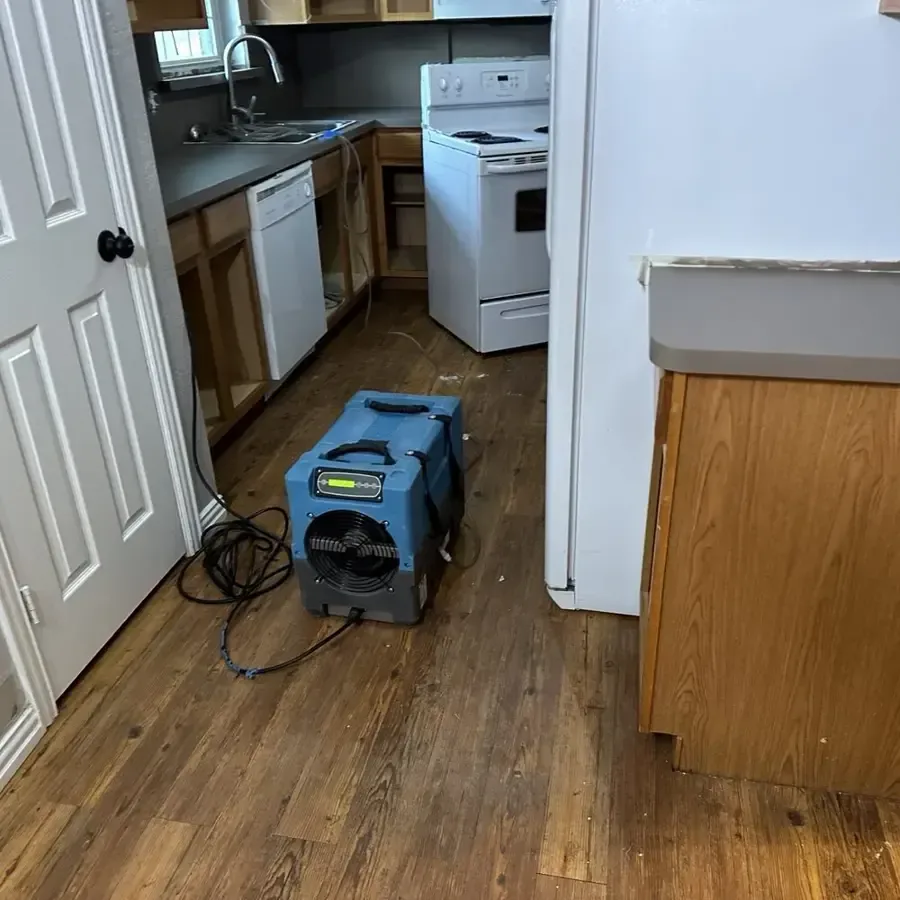
A burst washer hose, a leaking dishwasher or a cracked ice maker tube soaks the floor, the cabinets and the ceiling below. The drying team extracts the water, checks under cabinets and dries every wet layer.
(888) 432-4933Report the washer hose that let go Under-cabinet drying Subfloor readings Category 1 to 2
Why it works
Why the dry-out is measured, not guessed
Dispatch at any hour
The response team runs 24/7, and active water is treated as urgent on nights, weekends and holidays.
IICRC S500 drying standard
Moisture mapping comes first, then air movers and LGR dehumidifiers sized to the class of loss.
A claim file built as it happens
Timestamped photos before demolition, a moisture map and daily psychrometric logs go to the adjuster.
Built for cold-climate homes
Basements, sump pits, frozen pipes and ice dams lead the local list, so checks start below grade and at the eaves.
Do this first
What to do first for appliance and supply hose leaks
Safe steps for the household while the response team is on the way.
- 1
Shut the valve. Close the appliance supply valve or the main.
- 2
Unplug it. Disconnect power to the leaking appliance.
- 3
Pull out what you can. Empty the sink base and lower cabinets.
- 4
Photograph it. Record the floor and the hose or fitting.
Cost and insurance
What does appliance and supply hose leaks cost in Stillwater, MN?
Appliance leak water damage here usually runs $600 to $2,500 for one kitchen or laundry room, $2,500 to $6,000 when the ceiling below is wet, and $6,000 to $12,000 for hardwood or several rooms.
One room
$600 to $2,500
- Extraction
- Toe kick drying
- Readings
Ceiling below wet
$2,500 to $6,000
- Two-level drying
- Ceiling opening
- Air movers and LGR
Hardwood or several rooms
$6,000 to $12,000
- Floor drying mats
- Material removal
- Extended drying
Ranges are typical, not a quote: category of water, square footage, material class and how fast drying started move the number most. Run the water damage cost calculator for a closer range, and check your own policy for what it covers.
How it works
How appliance and supply hose leaks is handled, step by step
1
Map
Readings in floors, cabinets, ceilings.
2
Extract
Water pulled from floors and pad.
3
Dry
Air under cabinets, LGR running.
4
Verify
Readings until every layer is dry.
The full picture
Appliance and Supply Hose Leaks, explained
Common appliance failures
- Rubber washer hoses that split with age
- Dishwasher door seals and drain connections
- Plastic ice maker tubes that crack behind the fridge
- Toilet and sink supply hoses with worn fittings
Under the cabinets
Kitchen cabinets sit on the subfloor with a sealed toe kick in front. Water that runs under them stays trapped. The crew reads the cabinet bases and, when needed, removes the toe kick to push dry air under the boxes instead of tearing them out.
Washer leaks reach the floor below
A washer on the main floor or upstairs sends water through the subfloor into the ceiling below. Both levels are mapped and dried as one system.
Gray water changes the plan
Water from a washer drain or a dishwasher is Category 2. Pad usually comes out and surfaces get an antimicrobial. Clean supply water extracted fast can often dry in place.
Service area
Appliance and supply hose leaks across Stillwater and the St. Croix Valley
The drying team covers ZIP 55082 and 55083, from the downtown riverfront and the older homes near Main Street out along Highway 36 and Highway 96 to the Manning Avenue border.
Nearby coverage reaches Lake Elmo, Hudson, WI, Mahtomedi, Oakdale, White Bear Lake, Oak Park Heights, Bayport, Houlton, WI.
Water still moving? (888) 432-4933
More
Related water damage services
FAQ
Appliance and Supply Hose Leaks questions in Stillwater, MN
Still wet right now?
Water under the dishwasher or the washer? The drying team works kitchens and laundry rooms 24/7.
(888) 432-4933 (888) 432-4933Ask about the soaked cabinetsWhat causes most appliance leak water damage?
Split washer hoses, dishwasher seals and drain connections, cracked ice maker tubes and worn supply hoses on toilets and sinks.
Do cabinets have to come out after appliance leak water damage?
Usually not. Removing the toe kick lets dry air reach under the cabinet boxes. Cabinets come out only if they are swollen or the readings will not drop.
Is appliance leak water damage covered by insurance?
Sudden water from a failed hose or appliance is often covered. Slow leaks that ran for weeks are often excluded. Check your own policy.
How long does drying take after appliance leak water damage?
Most kitchens and laundry rooms dry in two to four days. Hardwood and water that reached the ceiling below take longer.
How can appliance leaks be prevented?
Braided steel washer hoses, leak sensors under the dishwasher and fridge, and shutting the washer valves before a trip all lower the risk.
24/7 emergency dispatch
Appliance flooded the floor? Get every layer dried.
Water from a hose or appliance runs under cabinets and into the ceiling below. The drying team reads every layer and dries it.
(888) 432-4933Have the cabinets read for water
Stillwater Water Damage Restoration
Stillwater, MN
(888) 432-4933
Open 24 / 7 / 365
Find us on Google