Extraction is the cheapest drying there is. A truck-mounted unit removes more water in an hour than days of fans, so the crew pulls every gallon it can before the first air mover goes down.
Standing water removal
Water Extraction and Removal in Stillwater, MN
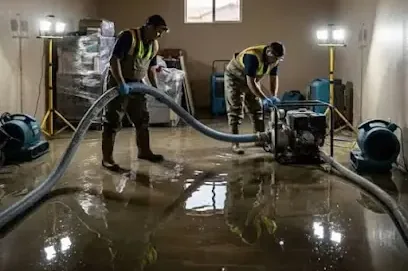
The extraction crew pulls standing water off floors and out of carpet pad with truck-mounted and portable units, then measures what soaked into drywall, framing and concrete so drying starts on the right materials.
(888) 432-4933Get the standing water pumped out tonight Truck-mounted extraction Moisture mapping IICRC S500 drying
Why it works
Why the dry-out is measured, not guessed
Dispatch at any hour
The response team runs 24/7, and active water is treated as urgent on nights, weekends and holidays.
IICRC S500 drying standard
Moisture mapping comes first, then air movers and LGR dehumidifiers sized to the class of loss.
A claim file built as it happens
Timestamped photos before demolition, a moisture map and daily psychrometric logs go to the adjuster.
Built for cold-climate homes
Basements, sump pits, frozen pipes and ice dams lead the local list, so checks start below grade and at the eaves.
Do this first
What to do first for water extraction and removal
Safe steps for the household while the response team is on the way.
- 1
Shut off the source. Close the main or the fixture valve so the water stops growing.
- 2
Cut basement power. Switch off breakers for wet outlets and appliances.
- 3
Move contents. Lift furniture and boxes off wet carpet.
- 4
Keep a record. Photograph the high-water mark on walls and contents.
Cost and insurance
What does water extraction and removal cost in Stillwater, MN?
Water extraction here usually runs $500 to $2,500 for one room of clean water, $2,500 to $6,000 for a basement or several rooms, and $6,000 to $15,000 when contaminated water reaches finished areas.
One room, clean water
$500 to $2,500
- Standing water removed
- Carpet and pad extracted
- Moisture readings
Basement or several rooms
$2,500 to $6,000
- Truck-mounted extraction
- Pad removal
- Drying setup
Contaminated or widespread
$6,000 to $15,000
- Category 2 or 3 water
- Material removal
- Antimicrobial
Ranges are typical, not a quote: category of water, square footage, material class and how fast drying started move the number most. Run the water damage cost calculator for a closer range, and check your own policy for what it covers.
How it works
How water extraction and removal is handled, step by step
1
Assess
Find the source and map the wet area.
2
Extract
Truck mount and wands pull standing water.
3
Dry
Air movers and LGR dehumidifiers set up.
4
Verify
Daily readings until materials read dry.
The full picture
Water Extraction and Removal, explained
Why extraction comes before air movers
Air movers evaporate water; they do not remove it in bulk. Water left in carpet pad or pooled against a basement wall keeps feeding moisture into drywall and framing, and the drying takes longer and costs more. Weighted extraction wands press water out of carpet and pad, and squeegee tools clear hard floors and bare concrete.
What gets checked after the water is gone
- Thermal imaging along wall bottoms to see how high water wicked
- Pin meter readings in baseboards, trim and framing
- Readings under cabinets and in the ceiling of the floor below
- A dry reference reading from an unaffected room
Carpet, pad and hard floors
Carpet soaked by clean water can often be saved when extraction happens early. Pad holds water like a sponge and is usually replaced. Laminate swells at the seams and rarely recovers, while tile and vinyl over concrete dry well once the slab underneath is dried.
When the water is not clean
Sump overflow, river water and sewage change the job. Gray and black water mean porous materials come out instead of drying in place, and an antimicrobial goes on before the drying equipment starts.
Service area
Water extraction and removal across Stillwater and the St. Croix Valley
The drying team covers ZIP 55082 and 55083, from the downtown riverfront and the older homes near Main Street out along Highway 36 and Highway 96 to the Manning Avenue border.
Nearby coverage reaches Lake Elmo, Hudson, WI, Mahtomedi, Oakdale, White Bear Lake, Oak Park Heights, Bayport, Houlton, WI.
Water still moving? (888) 432-4933
More
Related water damage services
FAQ
Water Extraction and Removal questions in Stillwater, MN
Still wet right now?
Water still standing on the floor? An extraction crew can be rolling at any hour.
(888) 432-4933 (888) 432-4933Ask for a truck-mounted unitHow fast should water extraction start?
As soon as possible. Drywall wicks water upward within hours, and growth can start on wet materials in 24 to 48 hours. Dispatch runs around the clock for that reason.
Can a shop vac do the same job as water extraction equipment?
A shop vac removes surface water but not what sits in carpet pad and along wall bottoms. Truck-mounted units and weighted wands pull far more water, which shortens drying.
Is carpet always thrown out after water extraction?
No. Carpet wet with clean water and extracted early can often be dried and kept. Pad is usually replaced, and anything soaked by sewage or river water is removed.
How long does drying take after water extraction?
A contained loss usually dries in three to five days. Concrete basement floors, plaster and soaked framing take longer, and equipment stays until readings say dry.
Does insurance pay for water extraction?
Extraction after sudden and accidental water, like a split pipe, is often part of a covered claim. Flooding and sump backup follow different rules, so check your own policy.
24/7 emergency dispatch
Standing water in the house? Get it out first.
Every hour water sits, it climbs the drywall and soaks the pad. The extraction crew pulls it out and maps what stays wet.
(888) 432-4933Send the extraction rig over
Stillwater Water Damage Restoration
Stillwater, MN
(888) 432-4933
Open 24 / 7 / 365
Find us on Google