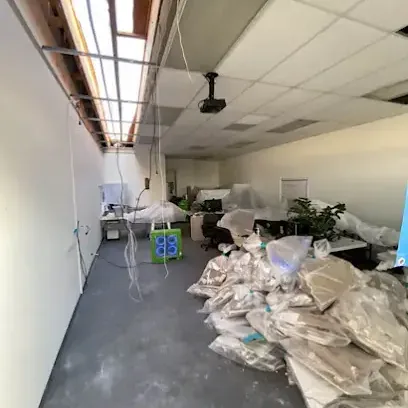
On June 12, 2024, a water main break flooded downtown streets and businesses while the St. Croix River ran high over its banks. The first day after water reaches a storefront sets the course for the whole job. That day, from the shutoff to the plan for reopening, is the part a shop or restaurant owner can control.
Key takeaways
- The June 12, 2024 main break flooded downtown streets and businesses, including a basement restaurant, while the river was running high.
- Power to wet areas and the building's main water shutoff come first, before any stock or equipment is moved.
- Water that crossed a street or rose through a floor drain is handled as contaminated, so porous materials such as carpet pad, insulation and low drywall usually come out.
- Drying in phases lets a dry sales floor or dining room stay in use while the back room and basement keep drying.
- Photos, a stock list and daily moisture readings are what a claim file is built from.
What the June 2024 main break showed
News coverage of June 12, 2024 described a water main break that flooded downtown streets and businesses, including a basement restaurant. The St. Croix River was running high over its banks that day, so the area had two sources of water at once.
For a business owner the source matters less than the result: water on the floor, in the walls and under the stock. A storefront can go from dry to soaked through a door threshold, a floor drain or a stairwell.
Where storefronts share a wall or a basement, water can pass from one address to the next. That is why neighboring owners often start the same steps at the same time.
- Street water pushing in at doors, thresholds and floor drains
- Basement and below-grade rooms filling before the main floor
- Stock, equipment and records stored at floor level
- Walls that keep wicking water upward after the floor looks dry
Safety and shutoffs come first
Standing water and electricity are a dangerous mix, and a flooded storefront can have outlets, lighting and equipment at floor level. Power to the wet areas should be cut from a dry spot, or by an electrician, before anyone wades in.
Next is the water supply. Closing the building's main shutoff keeps a broken pipe inside the building from adding to the flood.
- Cut power to wet areas from a dry panel, or ask an electrician to do it
- Close the main water shutoff for the building
- Keep staff and customers out of standing water
- Photograph the waterline, the stock and the damage before anything is moved
Sorting the water, then sorting what stays
Two decisions shape the cleanup: what kind of water it is, and which materials can be saved. Both are made on the first day, and the river and flash flood cleanup plan follows from them.
Water that came off the street
Water that ran along a street, picked up grit and entered through a door or a floor drain is handled as contaminated. River water is treated as Category 3 from the start, so anything porous that it touched is a candidate for removal.
The restoration team pulls the standing water first, then removes what cannot be cleaned and dries what can.
What usually comes out and what stays
Soft and porous materials soak up contaminated water and hold it, so they usually go. Hard materials can often be cleaned, treated and dried.
- Usually removed: carpet and pad, insulation, drywall that wicked water upward, particleboard shelving and cabinet bases
- Usually cleaned and dried: sealed concrete, metal shelving, equipment frames and solid wood fixtures
- Usually discarded: food, paper stock and packaged goods that touched the water
A basement dining room or storage level
A basement restaurant sits below the street, so water finds it first and leaves last. Water extraction there uses submersible pumps and truck-mounted units, and the room stays closed until the standing water is gone and the power is made safe.
Kitchen equipment, walk-in coolers and stored food are sorted early. Food that touched flood water is thrown out, and equipment is cleaned and checked before it goes back into use.
Drying in phases so the doors can reopen
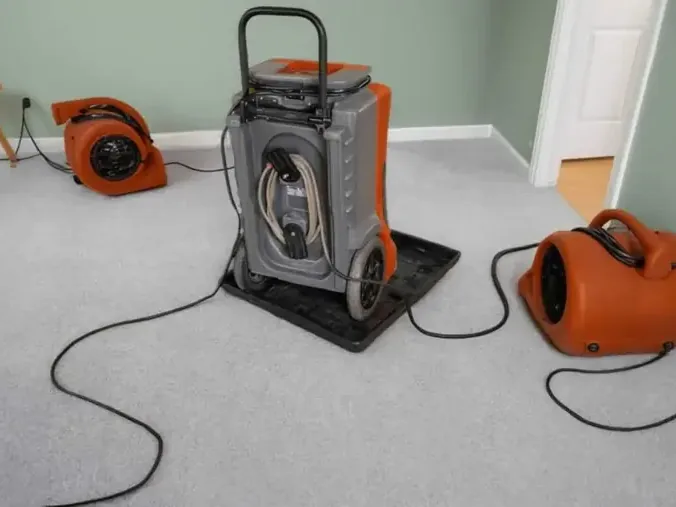
A storefront does not have to stay dark until every wall is dry. Drying can be planned in phases, with the sales floor or dining room dried first while the back room and basement continue.
Air movers and dehumidifiers run on a schedule, and daily moisture readings show when each zone has come within 2 to 4 points of a dry reference. Materials left wet for 24 to 48 hours can start to grow mold, which is why structural drying begins right after extraction.
Daily visits matter because wet areas change. A zone that read high yesterday may read near normal today, and a wall that looked dry may still need to be opened.
- Section off the wettest zones so the dry areas can stay in use
- Run equipment on a set schedule and log the readings each day
- Open walls where readings stay high instead of waiting
- Reopen each zone when its readings reach the dry reference
Records for the insurer and the landlord
A tenant should tell the landlord early, since the building and its contents can sit under different policies. Coverage for main break water and river water can differ, so the policy wording matters.
Owners with a lease should check who is responsible for what, since a landlord may handle the building while the tenant handles the contents.
A claim file is built from what was photographed and logged on the first day. Owners who want a plan for the whole space can start with the commercial water damage page.
- Photos and video of every room before cleanup starts
- A stock and equipment list with rough values
- Moisture readings and equipment logs from the drying team
- Receipts for pumping, hauling and temporary repairs
Questions
Is water from a main break clean?
Not once it has crossed a street or come up through a drain. Water that picked up dirt on the way in is handled as contaminated, and the cleanup is planned around that.
Can a restaurant stay open while drying is under way?
Part of it sometimes can. Sealing off wet zones and drying in phases can keep a dry dining room in use, while a flooded kitchen or basement stays closed until it is cleaned and cleared.
What should a business owner photograph first?
The waterline on walls and shelves, the floor in each room and the stock at floor level. Photos taken before anything is moved carry the most weight for a claim.
Does a high river change the plan?
Yes. With the river running high, water can keep returning to low points, so pumping continues and the lowest rooms are watched until the risk passes.
How long does drying take?
It depends on the materials and how far the water traveled. Moisture readings, not a calendar, decide when the work ends, and many jobs run several days.
Should staff help with the cleanup?
Staff can move dry stock and take photos. Contaminated water and electrical hazards are work for trained crews, and wading into standing water is a safety risk.