Stillwater gets about 42 inches of snow and 24 inches of rain in an average year, so the cold season is long enough for a mistake in October to become a flood in January. A frozen pipe is cheap to prevent and costly to clean up. A walk-through before the first hard freeze takes an afternoon.
Key takeaways
- Stillwater averages about 42 inches of snow and 24 inches of rain a year, so pipes face a long cold season.
- Disconnect hoses and shut off and drain outdoor faucets before the first hard freeze.
- Pipes in unheated spaces and along exterior walls are the usual trouble spots, and cabinet doors can be opened during a hard cold snap.
- Everyone in the house should know where the main shutoff is and how to close it.
- A pipe that has split needs the water shut off first, then extraction and drying.
Why October is the time to act
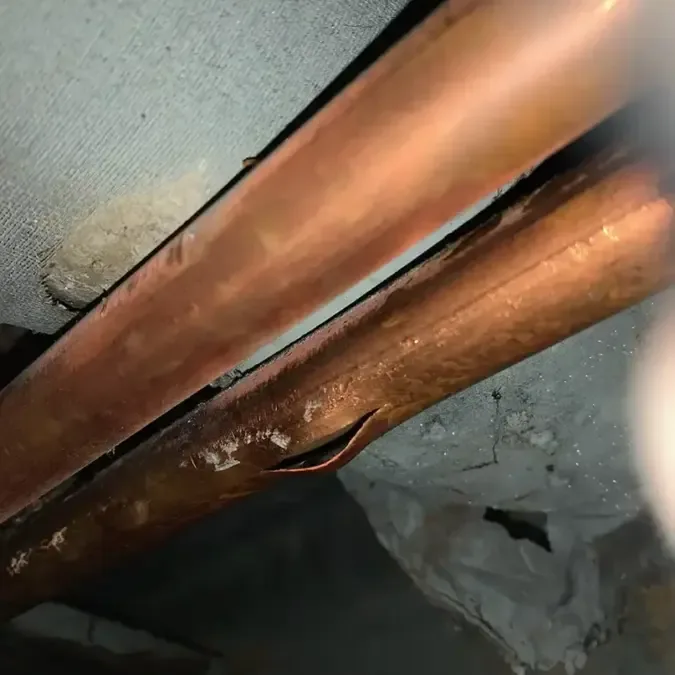
Stillwater gets about 42 inches of snow and 24 inches of rain in an average year. Water that stands in a pipe through a long cold spell freezes, expands and can split the pipe.
The split often goes unnoticed until the pipe thaws and the water runs, which is why the checklist starts before the cold arrives.
Outdoor faucets and hoses
A hose left attached holds water in the faucet and in the pipe behind it. That water can freeze and split the pipe inside the wall.
- Disconnect every hose and splitter
- Shut off the inside valve that feeds each outdoor faucet, where there is one
- Open the outdoor faucet to drain what is left
- Cover the faucet or fit an insulated cap
- Drain irrigation lines before freezing weather
Spots where pipes freeze first
Cold finds the weak points in a house. Pipes run through spaces that the furnace never fully warms, and a few extra steps there pay off.
Garages and unheated rooms
Supply pipes that pass through an attached garage or an unheated room sit close to the outside air. Insulation sleeves and sealed gaps keep the cold away from them.
A garage that is warm in October can feel very different after a week of hard frost, so the insulation matters most when the weather turns.
- Add foam sleeves to exposed supply pipes
- Seal gaps where pipes pass through walls or sills
- Keep the garage door closed in a hard freeze
Exterior walls and sink cabinets
A kitchen or bath sink on an exterior wall has its pipes tucked against the coldest surface in the room. Opening the cabinet doors during a hard cold snap lets room air reach them.
Heat, insulation and vacant rooms
A furnace keeps the main rooms warm, but pipes in vacant rooms, closets and exterior walls depend on leftover heat. Keeping interior doors open lets warm air circulate to spaces that would otherwise get cold.
Gaps around pipe openings, sills and old window frames send cold air straight at the nearest pipe. Caulk and foam are cheap, and they work best when the gap is found before the freeze.
- Keep interior doors open to bedrooms and bathrooms during a cold snap
- Seal gaps around pipes that pass through exterior walls
- Insulate the pipes themselves where they cannot be moved
- Add weatherstripping to garage doors and basement windows
The main shutoff drill
Every household member who is old enough should know where the main shutoff is and how to close it. A valve that is stuck or hidden behind boxes costs time when water is running.
Washing machine hoses and the water heater are other places where a failure floods a room quickly. Knowing the shutoff for each saves time.
- Find the shutoff and turn it once to make sure it moves
- Tag it so a guest or a neighbor can find it
- Know where the water heater shutoff and the electrical panel are
- Keep a flashlight and a towel nearby
Signs a pipe is freezing or has split
A faucet that runs slowly or not at all on a cold morning is the usual first sign. Frost on an exposed pipe, a bulge in the pipe or the sound of dripping inside a wall points to trouble.
- A faucet with a weak flow or no flow
- Frost on a visible pipe, or a pipe that is bulging
- A damp spot, stain or sagging patch on a wall or ceiling
- The sound of water running when no tap is open
- A sudden jump in the water meter reading
A cold snap or a trip away
During a hard cold snap, let a faucet on an exterior wall trickle and keep the heat on, even in rooms that are not used. Before a trip, ask someone to check the house, since a split pipe can run for days with no one home.
Heavy snow also tests the roof. A leak that shows up after a thaw may be an ice dam, which is covered under ice dam and roof leak damage, not a pipe.
- Keep the thermostat on and set to a level that keeps pipes warm
- Open cabinet doors on exterior walls
- Let a faucet drip during the coldest nights
- Ask a neighbor or relative to check the house during an absence
If a pipe freezes or splits
A pipe that is frozen but not split can be thawed slowly with warm air, such as a hair dryer, working from the faucet end toward the frozen section. Never use an open flame.
If a pipe has split, close the main shutoff, cut power near the water and photograph the damage. Then call for frozen pipe burst cleanup and water extraction, and for a wet lower level add basement water damage to the list.
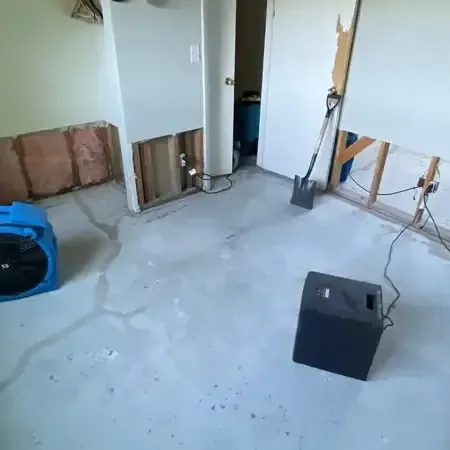
A split pipe inside a wall wets insulation, drywall and the floor below it. The crew pulls the standing water, opens the wall where readings show moisture and dries the cavity before it is closed.
- Close the main shutoff
- Cut power near the water
- Open a faucet to drain what is left in the pipes, if it is safe
- Photograph the damage
- Call for extraction and drying
Questions
When should outdoor faucets be shut off for winter?
Before the first hard freeze. Disconnect hoses, close the inside valve if there is one and drain the faucet.
Is it safe to thaw a frozen pipe with a torch?
No. Open flame can start a fire inside a wall. Warm air from a hair dryer, working from the faucet end toward the frozen section, is the safer way.
Do open cabinet doors really help?
They let room heat reach pipes on an exterior wall, which is where sink pipes are coldest. It is a small step that matters during a hard cold snap.
What comes first when a pipe splits?
Close the main shutoff, cut power near the water and photograph the damage. Extraction can then begin so the water does not sit in the walls.
How is a split pipe cleaned up?
The water is pumped out, wet materials that cannot be dried are removed and the area is dried with equipment until moisture readings return to normal.
Does a frozen pipe always split?
No. Many freeze and thaw without splitting. The split often shows up only after the thaw, when water starts running through the crack, so a frozen pipe is worth shutting off until it has been checked.