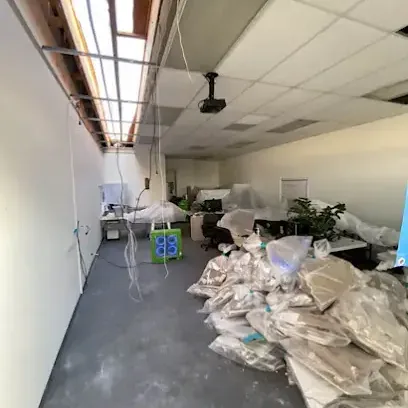
Downtown White Bear Lake is a walkable district of local shops and restaurants along Third and Fourth Streets, with historic brick storefronts and community events and entertainment. A leak in one of those buildings can keep a business closed longer than the leak itself lasted. The aim is a plan that dries the building and keeps the doors as open as possible.
Key takeaways
- The walkable downtown runs along Third and Fourth Streets and has historic brick storefronts.
- Brick and mortar take on water slowly and give it back slowly, so readings, not appearances, decide when a wall is dry.
- Leaks reach a storefront from the roof, from a unit above or from a supply pipe, and the ceiling often shows the first sign.
- Drying in phases can keep a dry sales floor or dining room open while the wettest areas are treated.
- A stock list, photos and the drying logs are the core of a business claim.
A walkable downtown built in brick
The walkable downtown area runs along Third and Fourth Streets and has historic brick storefronts. It is a district of local shops and restaurants, with community events and entertainment through the year.
For a business owner, that mix of foot traffic and brick buildings means a water problem is a business problem right away.
Where buildings share a wall or a roof, a leak in one is rarely only that building's problem. Owners often talk to neighbors early, and the building owner may need to be involved.
How water moves through brick, plaster and framing
Brick takes on water slowly and gives it back slowly. A wall that looks fine on the surface can hold moisture deep inside, and the mortar joints and any plaster or framing behind it can stay wet after the floor is dry.
Where a storefront has wood floors, plaster walls or older framing, water can travel along them to the next room before anyone sees it.
- Water enters from the roof, from a unit above or from a supply pipe
- Brick and mortar absorb water slowly and release it slowly
- Wood floors and framing swell as they take on moisture
- A ceiling stain often marks the first sign while the real source is above
The first day for a shop or restaurant owner
The order of the first steps matters: safety, the source, then the water. Stop the water at the source if it can be reached, cut power to wet areas and keep customers out of wet zones.
- Shut off the water supply to the leaking area or the building
- Cut power to wet circuits from a dry spot, or have an electrician do it
- Move stock and paper records off the floor and away from the ceiling
- Photograph the damage and the source before anything is moved
- Tell the landlord and the insurer right away
Ceilings and upstairs units
When a ceiling stains or sags, the cause is usually overhead: a roof leak, a pipe in the floor above or an appliance in an upstairs unit. Sagging drywall or plaster holds water and can fall, so it is opened carefully to let the water out and the joist bays dry.
Good ceiling leak water damage work includes tracing the source, since drying a ceiling under a live leak just starts the problem over.
Tin or plaster ceilings, where a building has them, can hold water longer than modern drywall and need slower, more careful opening.
Stock, kitchens and back rooms
A shop with stock on low shelves and a restaurant with a kitchen and walk-in cooler face different problems. Paper goods, clothing and cardboard soak quickly, while kitchen equipment can often be cleaned and returned to service.
Where a shop has a basement or back room used for storage or prep, a leak can sit unseen behind the sales floor.
Water in a lower level often travels along the floor and under walls before it shows. Checking those rooms early, with a flashlight and a moisture meter, turns a hidden problem into a visible one.
- Raise stock off the floor and cover it with plastic
- Move paper records and electronics to a dry area
- Check with the health authority before reopening a kitchen that took on water
- Photograph shelves and equipment before moving them
Drying in phases so the doors stay open
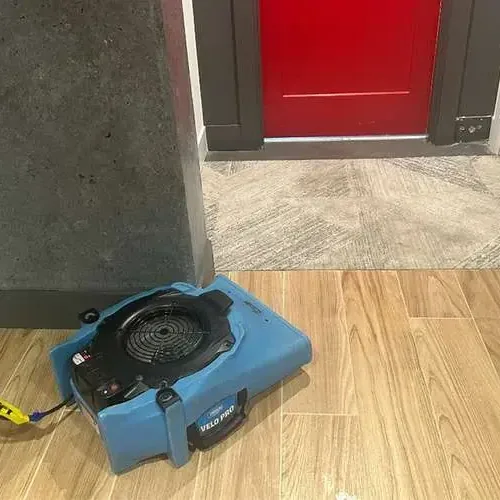
Brick takes longer to dry than drywall, so a drying plan for a storefront is built around readings, not a calendar. Structural drying can be set up in phases, with the sales floor protected first and the wettest areas treated behind a barrier.
Dehumidifiers and air movers run on a schedule and are checked daily. Materials left wet for 24 to 48 hours can start to grow mold, so the work begins right after extraction.
Brick and plaster dry more slowly than drywall and wood, so the dry reference for a zone is set by the slowest material in it.
- Zone off the wet areas with plastic barriers
- Dry the sales floor or dining room first when it is the least wet
- Take daily readings of brick, wood and drywall
- Remove only what cannot be dried, and record it
Records and the insurance claim
Business claims turn on records. A stock list with rough values, photos of every room and the drying team's daily logs support a claim for lost inventory and for the days the shop could not fully open.
For a business the work is staged unit by unit, and commercial water damage explains how that plan is built.
Business interruption coverage, where a policy has it, depends on the wording, and the records above support the claim.
- Photos and video taken before cleanup
- A stock and equipment list
- Daily moisture logs
- Receipts for pumping, hauling and temporary repairs
Questions
Why is brick slow to dry?
Brick and mortar absorb water slowly and give it up slowly. A wall can read wet inside long after the surface looks dry, so readings steer the work.
Can a shop stay open during drying?
Often part of it can. Drying in phases and barriers around the wet areas can keep a dry sales floor or dining room in use.
Who handles a leak from an upstairs unit?
The first step is to stop the water and tell the landlord and building owner. More than one party may be involved in the repair and the insurance.
What should a business owner do about a sagging ceiling?
Keep people out from under it. Sagging drywall or plaster holds water and should be opened carefully by the restoration team.
Which records help a business claim?
Photos taken before cleanup, a stock and equipment list, daily moisture logs and receipts for the work. These show what was lost and how long the space was affected.
How long until wet materials start to break down?
Materials left wet for 24 to 48 hours can start to grow mold, and wood floors and drywall begin to swell sooner. Starting extraction and drying early limits the scope of the job.