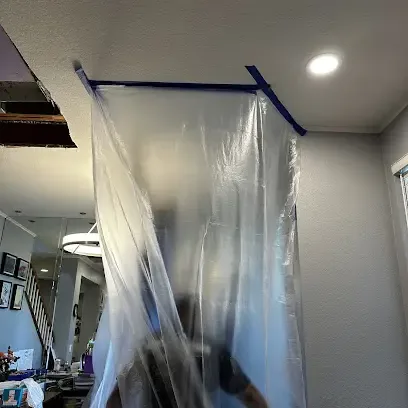
A sewage backup is never a pleasant discovery, and in Lake Elmo the first question is a practical one: is the home on its own septic system or on city sewer? The answer changes who needs to be called besides the cleanup crew. It does not change how the contaminated water is handled inside the house.
Key takeaways
- Older parts of the city are largely still on private well and septic, while newer western subdivisions such as NorthStar and Cimarron Park sit on municipal sewer.
- As of 2016 the city had never had a citywide sewer system, and a regional sewer for western areas, the Lake Elmo West Connection, had a listed construction window of spring 2024 to summer 2026.
- A sewage backup is Category 3 whether it comes from a septic tank or a sewer main, so porous materials that it touched are removed.
- A septic professional or the city may be needed for the system itself, while the cleanup crew handles the house.
- Coverage for sewage backup depends on the policy, so photos and a written scope help.
Two systems under one city name
As of 2016 the city had never had a citywide sewer system, and its first sewers were being built. Houses could be built almost anywhere on multi-acre lots or city lots of various sizes, each served by its own septic system.
The result today is a mix. Older parts are largely still on private well and septic, while newer western subdivisions, including NorthStar and Cimarron Park, sit on municipal sewer.
It would be wrong to assume that all of the city is on one system or the other.
Much of the land inside the city limits is still farmland, and houses on multi-acre lots can sit well apart. A backup in a seldom-used lower level can go unnoticed for a while.
How to tell which system a home uses
City of Lake Elmo utility bills cover water usage, sanitary sewer, stormwater management and state water testing. A sewer charge on the bill points to a municipal connection, while a home with no sewer charge may be on septic.
Other clues are easy to find in a closing packet or with a quick look in the yard.
- A sanitary sewer charge on the city utility bill
- A septic tank lid or a drain field marked in the yard
- A pumping record or inspection report from a septic company
- Whether the neighborhood is one of the newer western subdivisions
If the home is on a septic system
A struggling septic system often announces itself before sewage reaches the house: slow drains, gurgling pipes, wet ground over the drain field, or the lowest drain backing up. Local business owners told the Pioneer Press in 2016 that people had failing septic systems and that sewer was needed.
The tank and drain field need a septic professional. The inside of the house needs sewage backup cleanup, because the water that reaches a floor is contaminated no matter where it started.
- Stop using water in the house, since every drain feeds the same tank
- Keep people and pets out of the wet area
- Call a septic professional for the system and a cleanup crew for the house
- Property owners who join the new sewer were told they would pay to have old septic systems sealed
If the home is on city sewer
A blocked sewer main or a clogged home drain can push water up through the lowest drain, usually a basement floor drain or a shower. Western Lake Elmo gets sewer service through a City of Oakdale sewer that is nearing its capacity.
The Lake Elmo West Connection is a new regional sewer on the north side of Interstate 94 between Interstate 694 and Inwood Avenue in Oakdale, built to bring regional sewer service to western areas. Its listed construction window is spring 2024 to summer 2026, and it is the first phase of a program to improve regional sewer service to Oakdale, Woodbury and Lake Elmo.
- Metropolitan Council Environmental Services operates the metro area wastewater collection and treatment system
- None of this means a given home will back up; it explains why the system serving the area is changing
- A backup that affects neighbors too is worth reporting to the city
What to do right after a backup
The first steps are the same on septic and on sewer. Stop adding water to the system, keep people and pets away and avoid contact with the water.
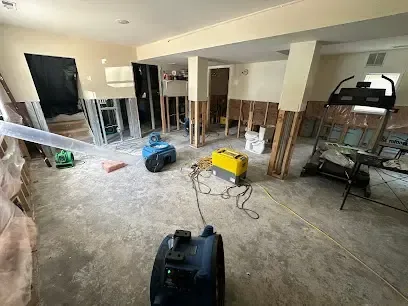
Then the cleanup crew can begin extraction, which keeps contaminated water from soaking further into walls and flooring.
- Stop using sinks, showers, toilets and laundry
- Keep children and pets out of the area
- Wear gloves and boots if the area must be entered, and wash well afterward
- Turn off power to the area if outlets or equipment sit in the water
- Photograph the water, the drain and the affected belongings
The cleanup is a Category 3 job either way
Sewage contains bacteria and viruses, so the cleanup crew treats it as Category 3 from the first minute. Protective gear goes on, and the area is closed off before any work begins.
What comes out
Porous materials soak up contaminated water and cannot be made safe, so they are removed and bagged.
- Carpet, pad and any rugs
- Drywall and insulation the water reached
- Cardboard boxes and stored paper goods
- Upholstered furniture that sat in the water
What is cleaned and dried
Concrete, framing and solid surfaces are washed, treated with a disinfectant and dried. Water extraction takes the standing water out first, and moisture readings show when drying is finished.
Sewage in a lower level also counts as basement water damage, since the water reaches the floor first.
Records and the right calls to make
Sewage backup coverage depends on the policy, and some policies treat it as an add-on. Photos taken before cleanup and a written scope of the work make the conversation with the insurer easier.
For homes in the newer western subdivisions, the city is the place to report a main problem. For homes on septic, the septic professional's report belongs in the file.
Questions
How can an owner tell whether a home is on septic or sewer?
Look for a sanitary sewer charge on the city utility bill, a tank lid or drain field in the yard, or a septic company's pumping record. Closing documents often say too.
Is a septic backup handled differently from a sewer backup inside the house?
No. Both are Category 3, and porous materials the water touched are removed. The difference is who repairs the system outside.
Does the Lake Elmo West Connection affect every home?
No. It is a regional sewer built to serve western areas, and not all of the city is on city sewer. Older parts are largely still on private well and septic.
Can sewage-soaked carpet be saved?
Almost never. Carpet and pad hold contaminated water, so they are removed, while hard surfaces underneath are cleaned and dried.
Should water use stop after a backup?
Yes. Every drain feeds the same system, so running water, showers or laundry can push more sewage into the house until the problem is found.
Who should be called first, a plumber, a septic company or a cleanup crew?
Often all three, each for a different part of the problem. A plumber or septic professional finds and fixes the cause, while the cleanup crew removes the contaminated water and dries the space.