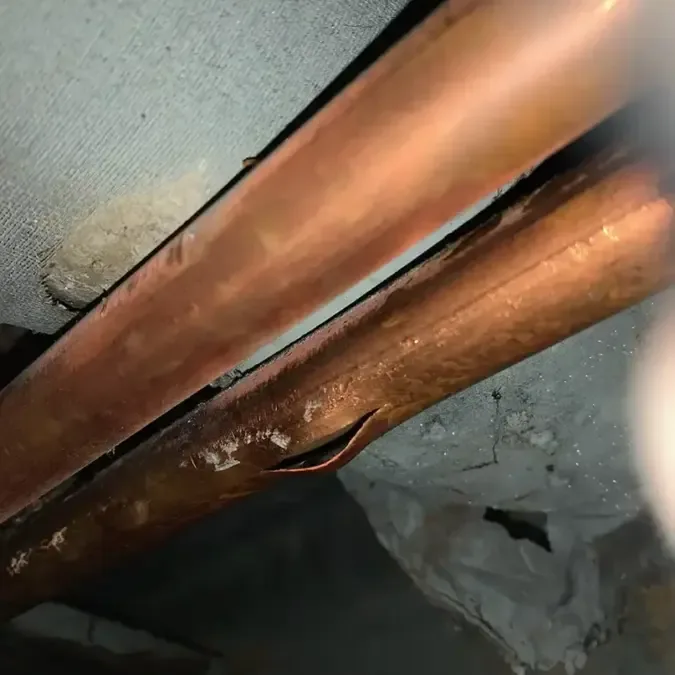
The city says most water meters in Oakdale homes sit in the basement, usually on an exterior wall facing the street. That puts a key piece of plumbing in one of the coldest parts of the lower level. When a meter freezes or a pipe beside it leaks, the first water lands on a basement floor.
Key takeaways
- Most home water meters are in the basement, usually on an exterior wall facing the street, according to the city.
- The city warns that a meter can freeze if the basement gets too cold, especially when a renovation put it behind a wall or panel.
- The homeowner pays to replace a meter that freezes or is damaged.
- For a leak before or after the meter, the homeowner arranges a plumber and then contacts Oakdale Public Works to have the water turned off at the street.
- For an absence of three months or more, the city will shut the water off at the curb at no charge, with a turn-on fee when service returns.
Where the meter sits and why it matters
According to the city, most water meters in homes here are in the basement, usually on an exterior wall facing the street. That is where the water service enters the house, and an exterior wall is among the colder spots in a lower level.
The city's guidance puts a leak before or after the meter in the homeowner's hands. That split decides who does what when something fails.
In a finished basement the meter may be boxed in or hidden, which helps the room look tidy and hurts heat and access.
- The water service enters the house at the meter wall
- An exterior wall loses heat faster than an inside wall
- A finished basement can hide the meter behind drywall or a panel
How a basement meter freezes
The city warns homeowners not to let the basement get cold enough to freeze the water meter in winter. The risk is higher when a renovation put the meter behind a wall or panel, because room heat no longer reaches it.
A frozen meter can be damaged, and a damaged meter can leak when it thaws. The city charges the homeowner to replace a meter that freezes or is damaged, and the leak adds a frozen pipe burst cleanup problem on top.
- Frost or a white coating on the meter or the pipe
- Little or no water at the taps after a cold night
- A damp patch or a drip on the wall near the meter
- A cold draft from a basement window near the meter
Who handles a leak before or after the meter
If there is a leak before or after the water meter, the homeowner must arrange a plumber and then contact Oakdale Public Works to have the water turned off at the street. The City of Oakdale Utilities Division operates, maintains and repairs the city's wells, water storage facilities, sanitary sewer systems, hydrants, watermains and water distribution.
In practice the steps run in a set order, and the cleanup starts as soon as the water is stopped.
- Close the home's main shutoff if it can be reached safely
- Call a plumber to repair the pipe or the meter connection
- Contact the city's public works office for a street shutoff if the leak cannot be stopped inside
- Photograph the source and the water before anything is moved
- Start water extraction so the floor and walls do not stay wet
Cleaning up a meter or supply pipe leak
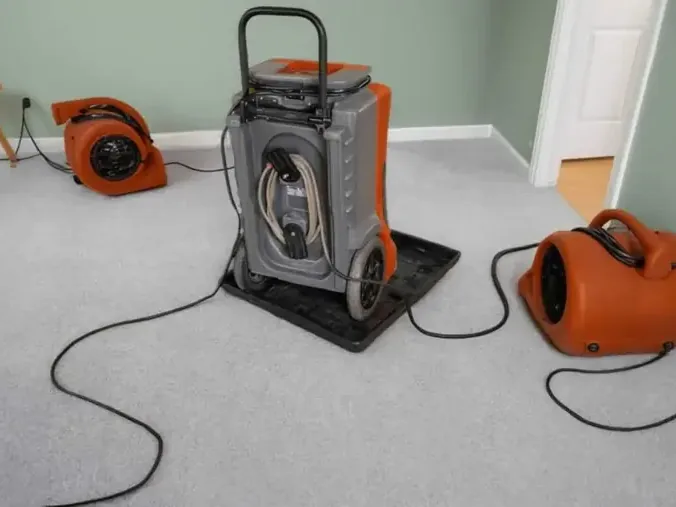
Water from a supply pipe starts out clean, so it is handled as clean water when it is removed quickly. Pumps and wet vacuums take the standing water first, and wet carpet and pad are lifted next.
On an exterior wall the water often runs behind finished surfaces. Moisture readings show whether drywall, insulation and framing are wet, and the bottom of the wall may be opened to dry the cavity.
Finished basements add a step. Baseboards come off so the bottom of the wall can be checked, and carpet is lifted so the floor beneath can dry.
Materials left wet for 24 to 48 hours can start to grow mold, which is why extraction and drying begin as soon as the leak is stopped.
Leaving for three months or more
If a resident will be away for three months or more, the city will shut the water off at the curb at no charge, with a turn-on fee when service is restored. The city says this can prevent leaks and possibly prevent pipes from freezing.
A winter absence is also the time to keep the basement from getting cold. A meter that freezes while nobody is home can leak for a long stretch before anyone sees it.
What the quarterly bill can reveal
The city's utility bill covers water usage, sanitary sewer, street lighting, storm water management and a Minnesota testing fee. Residential accounts are billed quarterly, so a slow leak can run for weeks before a bill shows it.
A jump in usage with no change in the household is a reason to check the meter and the pipes around it.
- Compare the latest quarter with the same quarter a year earlier
- Watch the meter with every tap and appliance off to see whether it keeps moving
- Look for damp spots or stains on the wall near the meter
A short winter checklist for the basement
A look with a flashlight in the fall shows whether the meter sits in a cold corner. Small fixes then cost far less than a flooded lower level and a basement water damage job.
- Find the meter and the main shutoff and make sure both can be reached
- Keep the basement heated, especially near exterior walls
- Never wall in a meter without a way to reach it and let room heat in
- Seal drafts around windows and the top of the foundation wall near the meter
- Keep a plumber's name and the street shutoff contact where everyone can find them
Questions
Where is the water meter in most Oakdale homes?
The city says it is in the basement, usually on an exterior wall facing the street.
Who pays to replace a frozen meter?
The city charges the homeowner to replace a meter that freezes or is damaged.
Who turns the water off at the street?
Oakdale Public Works turns the water off at the street, after the homeowner arranges a plumber for a leak before or after the meter.
Can the water be shut off while a family is away?
For an absence of three months or more, the city will shut the water off at the curb at no charge. A turn-on fee applies when service is restored.
How soon does a basement need drying after a supply leak?
As soon as the leak is stopped. Materials left wet for 24 to 48 hours can start to grow mold, so extraction and drying come first.
How can an owner tell whether the meter is leaking?
With every tap and appliance off, check whether the meter keeps moving, and look for dampness at the connections. A plumber can confirm the problem and repair it.