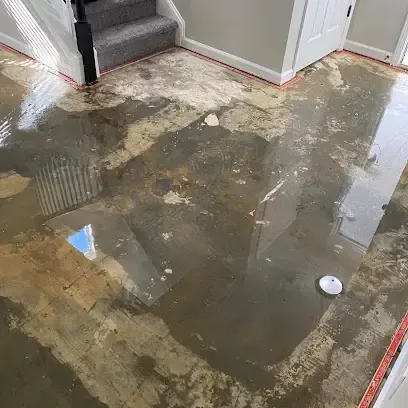
Flood water is different from a pipe leak. It comes from outside, carries mud and bacteria, and soaks carpet, padding and drywall that cannot be cleaned and kept. The response team pumps first, then sorts what can be saved from what has to go, starting with water extraction.
Heavy rain and rising water
River and Flash Flood Cleanup in Lake Elmo, MN
Floodwater carries soil and whatever it crossed, so it is treated as dirty from the start. The extraction crew pumps it out, removes porous materials it soaked and dries the structure.
(888) 432-4933Call about flood water now Pumping and extraction Soaked materials removed Drying and readings
Why it works
Why the dry-out is measured, not guessed
Dispatch at any hour
The response team runs 24/7, and active water is treated as urgent on nights, weekends and holidays.
IICRC S500 drying standard
Moisture mapping comes first, then air movers and LGR dehumidifiers sized to the class of loss.
A claim file built as it happens
Timestamped photos before demolition, a moisture map and daily psychrometric logs go to the adjuster.
Built for cold-climate homes
Basements, sump pits, frozen pipes and ice dams lead the local list, so checks start below grade and at the eaves.
Do this first
What to do first for river and flash flood cleanup
Safe steps for the household while the response team is on the way.
- 1
Pump out the water. Pumps and extractors clear standing flood water.
- 2
Remove soaked materials. Carpet, padding and wet drywall are cut out and bagged.
- 3
Clean and treat surfaces. Floors and framing are cleaned before drying starts.
- 4
Dry and verify. Equipment runs until meters show the structure is dry.
Cost and insurance
What does river and flash flood cleanup cost in Lake Elmo, MN?
Flood jobs run higher because the water is contaminated and the area is bigger. Shallow basement water is $3,000 to $8,000, soaked finished rooms are $8,000 to $20,000, and deep water across a whole level is $20,000 to $50,000.
Shallow basement water
$3,000 to $8,000
- Pumping and extraction
- Soaked flooring removal
- Antimicrobial cleaning
Finished rooms soaked
$8,000 to $20,000
- Drywall and carpet removal
- Structural drying
- Daily readings
Deep water, whole level
$20,000 to $50,000
- Heavy pumping
- Full material removal
- Extended drying
Ranges are typical, not a quote: category of water, square footage, material class and how fast drying started move the number most. Run the water damage cost calculator for a closer range, and check your own policy for what it covers.
How it works
How river and flash flood cleanup is handled, step by step
1
Pump
Clear standing water first.
2
Remove
Take out soaked porous materials.
3
Clean
Wash and treat hard surfaces.
4
Dry
Run equipment until readings are normal.
The full picture
River and Flash Flood Cleanup, explained
Water, drainage and heavy rain here
- Ditches, culverts and ponds in the city stormwater system carry runoff during heavy rain
- The Valley Branch Watershed District, established in 1968, does flood prevention and water quality work
- The NWS Twin Cities archive lists heavy rainfall and flash flooding across the region on September 21-22, 2016
None of this points to one local event. It explains why the team plans for dirty water, whether it came from a lake edge, a ditch or a storm.
Why flood water means removal
Anything porous that sat in flood water, such as carpet, padding and insulation, is usually removed because it cannot be made safe. Hard surfaces are cleaned and dried instead.
Drying after the pumps stop
Once the mud and water are out, air movers and dehumidifiers dry the structure and meters confirm it. A flood that reached the lower level also follows the basement water damage plan.
Service area
River and flash flood cleanup across Lake Elmo and nearby communities
The extraction crew works across ZIP 55042, from the Tri-Lakes area and Lake DeMontreville to Eagle Point Lake, along County State-Aid Highway 14 and the roads near Interstate 94.
The same service nearby: river and flash flood cleanup in Stillwater, Oakdale, Mahtomedi.
Water still moving? (888) 432-4933
FAQ
River and Flash Flood Cleanup questions in Lake Elmo, MN
Still wet right now?
Rising water inside a house is dirty water. The response team starts pumping when the call comes in.
(888) 432-4933 (888) 432-4933Ask about flood cleanupIs flood water ever safe to leave in a home?
No. Flood water carries soil, bacteria and runoff, and the longer it sits the more materials it ruins. Removal and cleaning should start as soon as it is safe to enter.
How is flood cleanup different from a pipe leak?
A pipe leak is usually clean water, while flood water is contaminated. That means more material removal, a cleaning step and protective gear before the drying begins.
Does the stormwater system stop flooding?
Ditches, culverts and ponds carry runoff, but heavy rain can still outrun them. The city's stormwater fee pays to maintain that system, and cleanup begins when water has reached the house anyway.
What happens to carpet and padding?
Carpet and padding that sat in flood water are usually removed and discarded. Hard flooring and framing are cleaned and dried instead.
Will the drywall always be cut out?
Not always. Drywall that stayed above the waterline and reads dry can stay, while sections that wicked flood water are cut out above the highest wet mark.
24/7 emergency dispatch
Water inside after a storm? Start the pump-out
Heavy rain can turn a lower level into a pond fast. Call now, any hour, and the crew will pump it out and remove what the water ruined.
(888) 432-4933Call the flood crew
Stillwater Water Damage Restoration
Stillwater, MN
(888) 432-4933
Open 24 / 7 / 365
Find us on Google