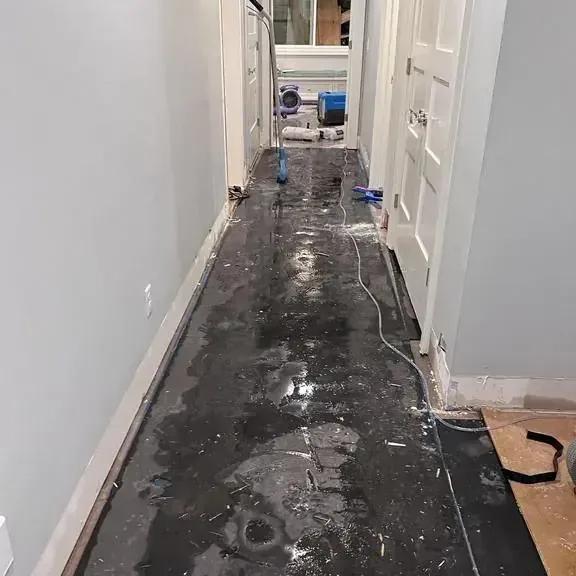
Water in a lower level soaks drywall from the floor up and wicks into wall studs and carpet pad. The first goal is to remove the depth, the second is to find every wet surface, and the third is to dry what can be kept so the rebuild stays small.
Wet lower levels
Basement Water Damage in Hudson, WI
A wet basement needs the water pumped out, the soaked materials removed and the framing and floor dried. The drying team works on finished and unfinished lower levels across the city.
(888) 432-4933Call to pump a wet basement Pumped and dried Finished or unfinished Moisture mapped
Why it works
Why the dry-out is measured, not guessed
Dispatch at any hour
The response team runs 24/7, and active water is treated as urgent on nights, weekends and holidays.
IICRC S500 drying standard
Moisture mapping comes first, then air movers and LGR dehumidifiers sized to the class of loss.
A claim file built as it happens
Timestamped photos before demolition, a moisture map and daily psychrometric logs go to the adjuster.
Built for cold-climate homes
Basements, sump pits, frozen pipes and ice dams lead the local list, so checks start below grade and at the eaves.
Do this first
What to do first for basement water damage
Safe steps for the household while the response team is on the way.
- 1
Stop the source. Close the supply and keep power off in the wet area.
- 2
Pump the depth. Pumps lower the water in stages until the floor is clear.
- 3
Open the edges. Baseboards and the lower drywall strip come off so wet cavities show.
- 4
Dry it down. Air movers and dehumidifiers run with daily readings until dry.
Cost and insurance
What does basement water damage cost in Hudson, MN?
Most lower-level jobs cost between $1,500 and $20,000, with finished space and contaminated water pushing a job toward the top end. A written scope should list demolition and drying days separately.
Unfinished basement
$1,500 to $4,000
- Pump and extract
- Floor dried
- Stored items moved
Finished basement
$4,000 to $9,000
- Drywall cut
- Carpet and pad out
- Several drying days
Contaminated or whole level
$9,000 to $20,000
- Containment
- Full demolition
- Extended drying
Ranges are typical, not a quote: category of water, square footage, material class and how fast drying started move the number most. Run the water damage cost calculator for a closer range, and check your own policy for what it covers.
How it works
How basement water damage is handled, step by step
1
Pump
Remove the standing water in stages.
2
Map
Find every wet surface and cavity.
3
Open
Cut out what cannot dry in place.
4
Dry
Run equipment with daily readings.
The full picture
Basement Water Damage, explained
Where the water goes after the pumping stops
- Wall cavities, where drywall wicks water several inches above the visible wet mark
- Carpet, pad and cabinet bases that hold water against the floor
- Bottom plates and studs that need air pushed into the cavity
Finished lower levels usually lose the bottom strip of drywall and the carpet pad, while unfinished ones may need only the floor and stored items dealt with. Readings decide how high the cut goes.
Cutting out only what has to go
Drywall that stayed wet beyond a day, or touched contaminated water, is removed so the cavity can breathe. Dry sections stay in place, which keeps repair costs lower. A dead pump behind the water is covered under sump pump failure cleanup.
Drying a full lower level
Air movers and dehumidifiers run for several days, and every visit records fresh readings. The method follows structural drying, since mold can start within 24 to 48 hours without it.
Service area
Basement water damage across Hudson and nearby communities
The drying team works in lower levels across the city and the village of North Hudson, in neighborhoods such as Stonepine, Red Cedar Canyon and Carmichael Ridge.
The same service nearby: basement water damage in Stillwater, Lake Elmo, Oakdale.
Water still moving? (888) 432-4933
FAQ
Basement Water Damage questions in Hudson, MN
Still wet right now?
Water in the lower level right now? Pumping first limits what has to be torn out.
(888) 432-4933 (888) 432-4933Call for basement pumpingHow long can a wet basement wait?
Not long. Drywall and carpet pad begin to fail within a day, and mold can start growing within 24 to 48 hours, so pumping and airflow should begin right away.
Does all the drywall have to be cut out?
No. Clean-water damage often needs only the lower strip removed, and dry sections above it stay. Contaminated water means the wet drywall comes out entirely.
Can finished flooring in a lower level be dried?
Sometimes. Wood and laminate over a wet floor often have to be lifted, while tile and sealed surfaces can be dried in place. Meter readings settle each case.
What if the water keeps coming back?
Drying cannot fix a recurring source. The crew documents the moisture, but a plumber, a drainage specialist or a contractor has to correct why the water is entering.
Who dries what the pumps leave behind?
The same crew moves from extraction into structural drying, placing air movers and dehumidifiers and logging readings each visit until the walls and floor reach the goal.
24/7 emergency dispatch
Start pumping out the lower level
Say how deep the water is, what finished materials it reached and what caused it, and the crew sets up pumps and drying equipment to match.
(888) 432-4933Call to dry the basement
Stillwater Water Damage Restoration
Stillwater, MN
(888) 432-4933
Open 24 / 7 / 365
Find us on Google