Pumping out the water is only half the work. Moisture in framing, subfloor and wall cavities has to be pulled out with controlled airflow and dehumidification, and the process follows the IICRC S500 method. Every job gets the same basic steps, scaled to the size of the loss.
Measured drying
Structural Drying and Dehumidification in Hudson, WI
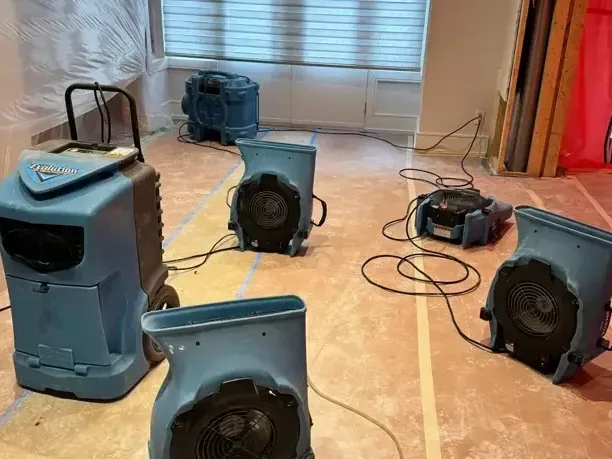
Water that soaks into framing, subfloor and wall cavities does not leave on its own. The drying team places air movers and dehumidifiers and checks readings daily until the structure is dry.
(888) 432-4933Call to start drying Daily readings Air movers placed Written dry goal
Why it works
Why the dry-out is measured, not guessed
Dispatch at any hour
The response team runs 24/7, and active water is treated as urgent on nights, weekends and holidays.
IICRC S500 drying standard
Moisture mapping comes first, then air movers and LGR dehumidifiers sized to the class of loss.
A claim file built as it happens
Timestamped photos before demolition, a moisture map and daily psychrometric logs go to the adjuster.
Built for cold-climate homes
Basements, sump pits, frozen pipes and ice dams lead the local list, so checks start below grade and at the eaves.
Do this first
What to do first for structural drying and dehumidification
Safe steps for the household while the response team is on the way.
- 1
Take baseline readings. Dry reference points set the goal for floors and walls.
- 2
Place the equipment. Air movers and dehumidifiers are sized and positioned for the wet area.
- 3
Check every day. Readings repeat daily and equipment moves where numbers lag.
- 4
Confirm the goal. Final readings across all surfaces approve removing the equipment.
Cost and insurance
What does structural drying and dehumidification cost in Hudson, MN?
Structural drying usually costs between $1,000 and $18,000, set by how many rooms are wet, how many days the equipment runs and whether dense materials such as plaster or hardwood are involved.
One room
$1,000 to $3,000
- Few air movers
- Short run
- Final readings
Basement or several rooms
$3,000 to $7,500
- More equipment
- Daily visits
- Logs kept
Class 4 materials
$7,500 to $18,000
- Dense materials
- Specialty drying
- Extended days
Ranges are typical, not a quote: category of water, square footage, material class and how fast drying started move the number most. Run the water damage cost calculator for a closer range, and check your own policy for what it covers.
How it works
How structural drying and dehumidification is handled, step by step
1
Baseline
Measure dry areas and set the goal.
2
Place
Position air movers and dehumidifiers.
3
Monitor
Read and adjust every day.
4
Confirm
Final readings pass.
The full picture
Structural Drying and Dehumidification, explained
How the drying is set up
- Readings from unaffected rooms set the dry goal for the house
- Air movers aim moving air across wet surfaces and into cavities
- Dehumidifiers remove the moisture from the air so it cannot resettle
Class 4 materials such as hardwood, plaster and concrete dry slowly and may need low-grain equipment and extra days.
Why the readings matter
A floor can feel dry while the subfloor still reads wet. Daily meter checks show where equipment should move, which walls need openings and when the goal is reached, so drying stops on measurement rather than guesswork.
Where drying fits
Drying follows extraction in water extraction and basement water damage, and mold can start within 24 to 48 hours if the cavities stay damp.
Service area
Structural drying and dehumidification across Hudson and nearby communities
Structural drying runs in homes and businesses throughout the city and the village of North Hudson, after leaks, floods and backups of every kind, from the riverfront to the neighborhoods.
The same service nearby: structural drying and dehumidification in Stillwater, Lake Elmo, Oakdale.
Water still moving? (888) 432-4933
FAQ
Structural Drying and Dehumidification questions in Hudson, MN
Still wet right now?
Walls and floors still damp? Moisture left inside keeps causing damage.
(888) 432-4933 (888) 432-4933Hudson drying helpHow long does structural drying take?
Most rooms need about 3 to 5 days, while dense materials and hidden cavities can take longer. The daily readings show when the goal is reached.
Why are fans and a dehumidifier both needed?
Fans move air across wet surfaces and lift moisture. The dehumidifier removes that moisture from the room, so it does not settle into other materials.
Can wet drywall be dried in place?
Sometimes, if the water was clean and the drywall has not stayed wet long. Sagging, swollen or contaminated drywall is removed so the cavity can dry.
Does drying make the house noisy or hot?
The equipment is loud and adds heat, so rooms feel warm. That is normal, and it is switched off and removed as soon as the readings pass.
Who decides when drying is finished?
The readings do. When every affected material matches the dry goal set from unaffected areas, the equipment is removed and the numbers are recorded.
24/7 emergency dispatch
Dry the structure until the readings agree
Describe what got wet and how long ago, and the crew sets the dry goal, places the equipment and keeps daily readings until the structure passes.
(888) 432-4933Call to plan the drying
Stillwater Water Damage Restoration
Stillwater, MN
(888) 432-4933
Open 24 / 7 / 365
Find us on Google